Roofing Decisions for Casino Resorts and Coastal Hotels
A hospitality roof on the Mississippi Gulf Coast is rarely a simple rectangle. Between the casino floor, the ballroom wing, the guest tower, and the parking structure, a single property can carry three or four different roof assemblies, each with its own age and its own problems. When one of those sections starts leaking, the repair bill is the smaller number. The bigger number is a wet carpet in a suite, a stained ceiling tile over a slot bank, or a canceled banquet.
The Roof Sits Over Occupied Revenue Space
Casino floors, convention space, and banquet halls run under some of the largest single-span low-slope roofs on the coast. These areas are occupied nearly around the clock, which means a leak isn't a maintenance item you get to on a slow Tuesday. Water finds its way to gaming equipment, sound systems, and finished ceilings fast, and the cost of a shutdown to protect that equipment usually outruns the cost of the roof work itself.
We look at hospitality roofs section by section rather than as one project, because the casino floor, the kitchen and back-of-house wing, and the guest tower age differently and take different loads. A membrane that's holding up fine over the parking garage may be years past its service life over the kitchen exhaust corridor, where grease and heat break coatings down faster than anywhere else on the property.
Staying Open While the Work Happens
Very few hospitality owners on this coast can close a wing to re-roof it. We plan phased work that moves across the roof in sections small enough to keep under a day's exposure, so no area sits open overnight during storm season. Adhesives and equipment get chosen with odor and noise in mind, since a hotel guest three floors down shouldn't know a roof crew is overhead.
Night work and early-morning starts are common on hospitality projects for this reason, timed around valet traffic, banquet load-in, and housekeeping schedules rather than a standard workday. Coordination with hotel operations and engineering staff matters as much as the roofing work itself, because a crew that shows up without a plan for elevator access or loading dock timing creates problems the general manager didn't sign up for.
Salt Air and Wind Load on Beachfront Membranes
Properties along US-90 and the beachfront take a different beating than roofs a few miles inland. Salt-laden air corrodes exposed metal fasteners and edge flashing faster than most owners expect, and wind uplift at the roof perimeter and corners is where coastal membranes fail first, not in the field of the roof. We look hard at edge metal, coping, and perimeter fastening patterns on every hospitality inspection, because that's where a named storm finds the weak point.
TPO, PVC, and adhered EPDM each handle coastal exposure differently, and the right call depends on the roof's slope, the deck below it, and how much wind uplift resistance the building's height and location call for. A guest tower facing the water needs a different fastening and perimeter detail than a single-story banquet annex set back from the beach, even on the same property.
Rooftop Equipment Density
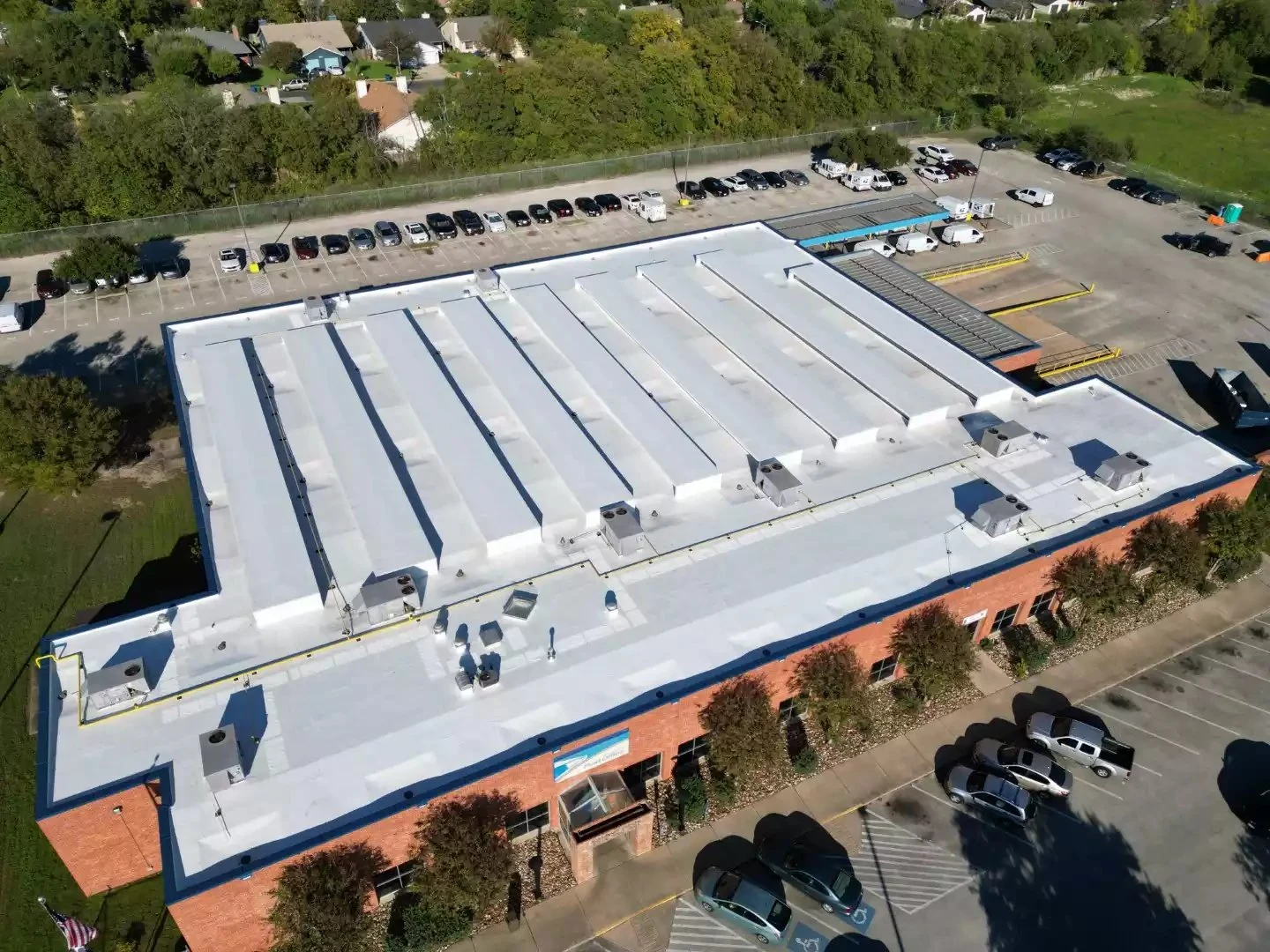
Hospitality roofs carry more penetrations per square foot than almost any other commercial building type on the coast. Kitchen exhaust fans, makeup air units, cooling towers, and dozens of individual condensing units for guest room HVAC all punch through the membrane, and every one of those curbs is a potential leak point if the flashing wasn't detailed correctly the first time.
- Kitchen exhaust curbs where grease and heat degrade flashing fastest
- Cooling tower platforms and their vibration-driven fastener loosening
- Guest room condensing unit pads and their individual penetrations
- Perimeter edge metal and coping on beachfront-facing elevations
- Roof drains serving banquet and convention wings with heavy foot traffic nearby
- Skylights or smoke vents over casino floors and atriums
Timing Work Around the Season, Not Around a Calendar
A casino or resort doesn't have a true off season the way a school does, but there are real differences between a slow midweek stretch in late summer and the peak convention and holiday months. We build re-roofing and major maintenance schedules around occupancy and event calendars the ownership group provides, not around whatever week happens to be open on a contractor's schedule.
Hurricane season adds another layer to that planning. Starting a full tear-off in August without a hard completion date invites disaster if a storm tracks toward the coast mid-project. We sequence hospitality work so that no section of roof is left without a complete, storm-rated system in place overnight during the active months of the season.
Questions Hotel and Casino Operators Ask Us
How do you re-roof a hotel without shutting down guest floors?
We break the roof into sections small enough to fully dry in and secure within a single work shift, so no area is left exposed overnight, and we schedule the loudest work for hours when it won't disturb guests below.
What roof membrane holds up best to salt air on the beachfront?
It depends on the building's height, slope, and exposure, but perimeter detailing and fastener corrosion resistance usually matter more than the membrane brand itself. We evaluate each elevation separately rather than specifying one system for the whole property.
Can re-roofing happen during hurricane season?
It can, but only with a sequencing plan that keeps every open section fully weathertight by the end of each shift. We won't leave a partial tear-off exposed going into a forecast window.
How do you handle the noise and smell of roofing work near occupied guest rooms?
We select low-odor adhesives where the assembly allows it, schedule the noisiest phases for off-peak hours, and stage material handling away from guest tower air intakes.
What's the most common mistake hospitality owners make with roof maintenance?
Treating the whole roof as one asset instead of several. The kitchen wing, the guest tower, and the parking structure age at different rates, and a single inspection report covering all of them tends to miss the section that's actually closest to failure.