Re-Roofing Occupied Hotels Along the Gulfport-Biloxi Waterfront
Beachfront and highway-corridor hotels along US-90 and I-10 run at or near full occupancy for most of the year on the Coast. A roof project on a working hotel has to solve two problems at once: get the building weathertight before hurricane season and do it without a stream of guest complaints about noise, leaks, or blocked access.
The Guest-Floor Reality of a Hotel Re-Roof
A leak that shows up as a ceiling stain in a corner guest room is a room out of inventory until it's fixed, and it's a review posted the same night. Hotel ownership groups on the Coast tend to underestimate how much a slow-developing roof leak costs in lost room revenue and reputation compared to the price of catching it early.
We treat hotel roof problems as a revenue question from the first site visit. A leak pattern that traces back to a single failed pipe boot gets fixed as a priority repair the same week, not queued behind a full capital project timeline, because the room above it is losing money every night it's out of service.
Timing Work Around Hurricane Season
June through November is the window every hotel owner on this stretch of coast has to plan around. A re-roof scheduled to finish in April gives the building a full season of margin before storm risk climbs. A project that stalls into July leaves partial tear-off sections exposed right when tropical activity typically ramps up.
We sequence hotel projects to close out membrane work before the season starts whenever the calendar allows it, and when it doesn't, we plan smaller daily work zones so no more of the roof is open than can be dried in before a storm cell moves through. Occupied hotel work does not get the luxury of large open sections sitting overnight.
Coordinating Access Without Disrupting Guests
Material staging, crane placement, and dumpster location all have to work around valet drives, pool decks, and guest parking that a resort property depends on daily. We map access and staging with the general manager before a crew shows up, not after equipment is already blocking the porte-cochère.
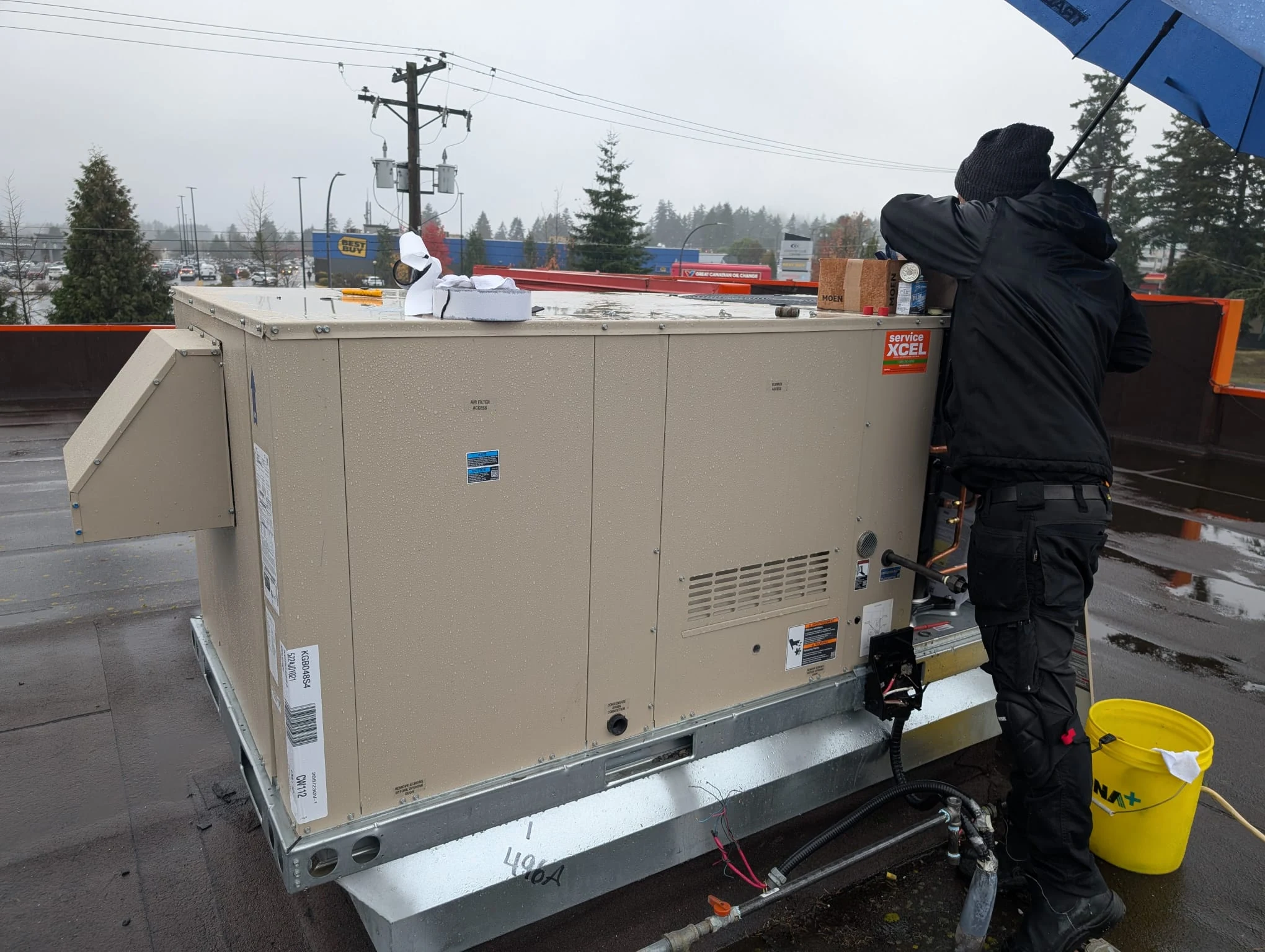
Interior coordination matters just as much. Roof penetrations for plumbing stacks or HVAC often run directly above guest corridors, and cutting into that area means shutting down a hallway or a bank of rooms for a window of time we agree on in advance, not whenever the crew gets to it.
What Coastal Exposure Does to Hotel Roof Systems
Salt-laden air moves off the Sound and the Gulf onto every hotel roof within a few miles of the water, and it works on flashing metal, exposed fasteners, and mechanical curbs faster than inland weathering does. Coping caps on beachfront towers show corrosion well ahead of the membrane's own service life in a lot of cases we've assessed.
A hotel roof spec on this coast should include:
- Corrosion-resistant fastener and flashing packages rated for salt-air exposure
- Enhanced perimeter and parapet fastening tied to the property's actual wind zone
- Pipe boot and pitch pan replacement on a shorter cycle than inland properties, since these fail first
- Drain capacity checked against the roof's real slope, not the original design slope
- A pre-season inspection scheduled every spring ahead of hurricane season
Documentation That Protects an Ownership Group
Hotel ownership groups on the Coast typically carry named-storm insurance with specific documentation requirements, and a roof claim without dated pre-storm condition photos is a harder claim to support. We keep a photo record of roof condition on hotel properties we service, updated at each inspection, so that record exists before it's needed rather than being reconstructed after a storm.
Balcony and Walkway Drainage on Exterior-Corridor Properties
A number of the mid-rise and roadside hotels along US-90 use exterior corridors and open balconies rather than fully enclosed interior hallways, and the drainage details on those walkway decks work the same way a low-slope roof does, just at a lower level and closer to guests. Clogged deck drains and failed walkway membrane produce the same kind of interior leaks into rooms below as a roof problem does, and they get overlooked in a standard roof inspection scope that only looks at the top of the building.
We include exterior corridor and balcony deck drainage in a full property assessment when a hotel's design includes them, since these details fail on a similar timeline to the main roof and often get missed by inspection scopes that stop at the roofline.
Seasonal Occupancy Swings Along the Coast
Gulf Coast hospitality properties see meaningful swings between peak tourist season and slower stretches during the year, and that occupancy pattern creates natural windows for roof work that a property running at consistent capacity year-round wouldn't have. A shoulder-season stretch with lower booking volume is often the best window to schedule a re-roof, since fewer occupied rooms sit directly under active work at any given time.
We work with hotel ownership to identify the lowest-occupancy stretch on their specific property's calendar rather than assuming a generic slow season applies uniformly across every Coast hotel.
Common Questions From Hotel Owners and GMs
How long does a hotel re-roof take on an occupied property?
It depends on square footage and how the roof is segmented, but occupied hotel work runs slower than a vacant building project because each section has to be fully dried in before the crew moves to the next.
Will guests hear the work from their rooms?
Tear-off and fastening are audible, particularly on upper floors closest to the roof deck. We schedule the loudest phases for hours the property sets and avoid work directly above rooms during peak check-in and overnight hours where possible.
Should a hotel re-roof happen before or during hurricane season?
Before, whenever the project timeline allows. A completed roof gives a full season of margin; a project still open in July carries more exposure than most ownership groups want to accept.
What's the biggest cause of hotel roof leaks on this coast?
Failed pipe boots and pitch pans around plumbing and mechanical penetrations, more often than field membrane failure. These small components take the most weathering and get replaced the least often.
Do you provide documentation for insurance renewal inspections?
Yes. We provide a written condition report and photo documentation that ownership groups can submit as part of their insurance renewal or underwriting process.